

By:
Tony Perez
THE PRACTICE OF STILLNESS
Leadership, peace, and mastery all begin with this sequence: think with clarity, speak with integrity, act with stability — and stand firm enough to steady others.
Here's the glyph's I came up with while practing drawing shapes.
Comments

2

Click to view full image.
Comment Added:
Posted Date
Edited
Edited Date
By:
Tony Perez
THE ART OF TURNING PAIN INTO PURPOSE -
Hi Alan.
thanks for your insightful post and great question: "How can we take the trauma, distress, depression, bad experiences, and turn it around to create something beautiful thru martial and paxtial arts?" My take is this:
Many people believe martial arts helps because it teaches us how to fight. In my experience, its deeper gift is that it teaches us how to transform suffering into service.
Trauma sharpens attention. Distress creates sensitivity. Depression forces reflection. Bad experiences expose reality.
These things are painful, but they are also raw material.
The difference lies in what we do with them.
A victim asks: "Why did this happen to me?"
A peacemaker eventually asks: "What can this teach me about protecting life?"
Paxtial Arts offers a particularly powerful framework because its purpose is not domination. Its purpose is preservation.
The peacemaker mind does not deny suffering. It metabolises it.
The humiliation of being bullied becomes empathy for the vulnerable.
The fear of violence becomes awareness and prevention.
The experience of betrayal becomes discernment.
The experience of failure becomes humility.
The experience of loss becomes compassion.
The experience of personal darkness becomes a lantern capable of illuminating the path for others.
In this sense, the highest expression of martial or paxtial arts is not creating stronger fighters.
It is creating wiser guardians.
The black belt is not a symbol of combat proficiency.
It is evidence that pain was transformed into principle.
The peacemaker mind sees significance over threat because every situation contains information beyond the obvious. In a recent post I wrote that the eyes cannot see what the mind has not been taught to notice.
Where others see conflict, the peacemaker sees unmet needs.
Where others see danger, the peacemaker sees patterns.
Where others see mistakes, the peacemaker sees lessons.
Where others see trauma, the peacemaker sees the possibility of meaning.
Perhaps this could become a core Paxtial Arts principle:
Transform Wounds into Wisdom. Transform Fear into Awareness. Transform Awareness into Understanding. Transform Understanding into Protection. Transform Protection into Service.
That is how suffering becomes beautiful.
Not because the suffering was beautiful.
But because something beautiful was built from it.
Like every heartbreak becomes a country song.
And that may be one of the deepest purposes of the peacemaker: not merely to survive life's hardships, but to convert them into light for others.

Click to view full image.
Comment Added:
Posted Date
Edited
Edited Date
By:
Tony Perez
THE EYES DO NOT SEE WHAT THE MIND HAS NOT BEEN TAUGHT TO NOTICE
The Reticular Activating System (RAS) is one of the most important neurological systems in self-defense, not because it makes you stronger or faster, but because it determines what you notice, how quickly you notice it, and whether you act on it in time.
In simple terms, the RAS is the brain's “attention filter”. It is the brains “wake-up” centre, a network of neurons in the brainstem that helps regulate alertness, awareness, and the prioritization of sensory information. Every second, your senses receive vastly more information than your conscious mind can process. The RAS decides what gets through and what gets ignored
A practical example
Imagine walking through a crowded shopping centre.
Thousands of sights, sounds, movements, and conversations compete for your attention. If your brain processed everything equally, you would be overwhelmed. Instead, your RAS filters the information and highlights what appears relevant.
This is why:
- A parent instantly hears their child's voice in a noisy crowd.
- You suddenly notice a car model after buying one yourself.
- Your attention snaps toward someone yelling aggressively nearby.
The RAS is constantly asking:
"What matters right now?"
The self-defense connection
From a self-defense perspective, the RAS is often the difference between:
- seeing danger early,
- seeing danger late,
- or not seeing danger at all.
Most assaults do not begin with a punch. They begin with:
- unusual behaviour,
- invasion of personal space,
- predatory observation,
- changes in body language,
- environmental anomalies.
The person whose RAS is tuned to recognize these cues often detects trouble before it becomes violence.
The person whose attention is absorbed by a phone, internal thoughts, or distractions may miss the same warning signs.
The Peacemaker Mindset and the RAS
A peacemaker is not paranoid. A peacemaker is attentive.
The goal is not to scan endlessly for threats. The goal is to condition the RAS to notice indicators that matter while remaining calm and engaged with life.
Think of the RAS as a spotlight operator.
If you tell it:
"Watch for danger."
it will search for danger.
If you tell it:
"Watch for exits, unusual behavior, and vulnerable people who may need help."
it begins highlighting those things.
Your training priorities literally influence what your brain notices.
Why experienced martial artists often "see things sooner"
Students often believe senior practitioners possess faster reflexes.
In reality, experienced practitioners frequently appear faster because they:
- Recognize patterns sooner.
- Notice subtle pre-attack indicators.
- Interpret cues more accurately.
- Begin responding earlier.
Their RAS has been trained through years of exposure to movement patterns, body language, distance management, and environmental assessment.
The advantage is not always ballistic speed.
It is often earlier perception i.e. mental speed.
The OODA Loop connection
Colonel John Boyd's OODA Loop consists of:
- Observe
- Orient
- Decide
- Act
The RAS sits at the very front end of this process.
If the RAS fails to identify important information, the entire loop is compromised.
You cannot orient to what you never observed.
You cannot decide about what you never noticed.
You cannot act on what never entered conscious awareness.
Training the RAS for self-defense
The RAS can be conditioned by repeatedly focusing on what is important.
Useful self-defense habits include:
- Identifying exits whenever entering a room.
- Noticing hands rather than faces during risk assessment.
- Observing changes in emotional behavior.
- Maintaining awareness of distance and positioning.
- Practicing environmental scanning.
Over time these habits become automatic. The RAS begins selecting these details without conscious effort.
A Paxtial Arts perspective
Viewed through a paxtial lens, the RAS is not merely a threat detector.
It is a relevance detector.
The peacemaker trains awareness not to find enemies, but to perceive reality clearly.
A useful maxim might be:
“The world reveals itself to those who have learned what matters”.
The RAS is the neurological expression of that principle. It continuously asks:
What matters?
Self-defense training, at its highest level, teaches the mind to answer:
"Safety, scenario, people, patterns, opportunities for peace, and the earliest signs of trouble."
That answer determines what the peacemaker sees long before action becomes necessary
The peacemaker mind is not focused on threat. It is focused on significance.

Click to view full image.
Comment Added:
Posted Date
Edited
Edited Date
By:
Alan Stander
Things about to get beautiful
I heard a quote today that went something like
When an artist is distressed or struggling, things are about to get beautiful
I know when artists are in a lot of pain of whatever kind theres something about being an artist that they will take their struggle and put it on paper of some kind, maybe a canvas. The country genre is well known if not notorious for doing just that. How do we take our distress and use it to propell us foreward? its like the saying if a rock singer breaks a toe he's out of business but if a country singer breaks a toe he'll write a song about it and that song will propell him into stardom.
Back in the 70s record companies were willing to take a risk on someone they had never heard of and as a result uncovered many who produced many high selling records and some who were in that category were likely struggling.
The big band era is pretty much forgotten except by those who follow art history. Todays popular songs are soon replaced and forgotten and the world moves on.
Yet, there will be some that last for decades or centuries. There are folk songs quite recognizable today. There are songs that were written 400 years ago that people today are learning. A lot of those who wrote these had lives that were in turmoil. The composer Beethoven wrote music while deaf. His life had a lot of turmoil. Yet he gave us songs that speak to us in a deep way and people are continuing to play. Make a study of hymns and songs that are in use where you go to church. Learn how they came about as well as learning the words and notes. When you do you will likely find the person who wrote them had a lot of trauma. If you have the ability to write a song or read the words and notes of another or take a canvas and put your life into color, you can do the same and can give the world something that relates on a deeper level than other things, and many of you can do just that. There might be a future Beethoven reading this.
But we are artists to, martial and paxtial artists. So how do we make something beautiful happen by putting this art into practice? I have seen many of you in action. we are not lacking for depth, I know that, but I also know the people who read this have the ability to create. So I'm interested in the experiences and ideas of others as you have overcome challenges. How can we take the trauma, distress, depression, bad experiences, and turn it around to create something beautiful thru martial and paxtial arts?
Click to view full image.
Comment Added:
Posted Date
Edited
Edited Date
By:
Andrew Pilch
Less Blood, Guts, and Death 👍
Thanks Tony!

Click to view full image.
Comment Added:
Posted Date
Edited
Edited Date
By:
Tony Perez
DISCIPLINED PERCEPTION
Fear management is not merely about enduring violence. It is about interrupting the chain long before violence is required.
· Critical Thinking clears the internal fog.
· Self‑Awareness stabilizes your emotional center.
· Situational Awareness expands your perceptual horizon.
Together, they give you the defender’s greatest advantage: the ability to recognize threat indicators early enough to avoid the confrontation entirely.
And this leads to the essential reminder that not all encounters lead to blood, guts, and death.
Most never need to escalate that far. Most can be dissolved through early detection, calm interpretation, and timely avoidance.
Violence is a failure of awareness. Avoidance is the victory of disciplined perception. This is the wisdom which lies at the heart of a Paxtial Artist: the wisdom to see danger early, the clarity to avoid it, and the skill to respond proportionately only when you must.
Click to view full image.
Comment Added:
Posted Date
Edited
Edited Date
By:
Andrew Pilch
Does Violence Require Intent?
You questioning as to what violence is caught my attention. Great point as to if an earthquake was violence.
The thing that immediately sprung into my mind was intent. I felt like there would be something other to consider, so I did some digging to see what the world was saying, starting with the standard definition.
Standard definitions
Merriam-Webster’s core sense is “the use of physical force so as to injure, abuse, damage, or destroy.” That wording does not name intent. The same dictionary also covers non-human “violence” (a storm).
The definition most institutions actually use for people is the World Health Organization’s:
the intentional use of physical force or power, threatened or actual, against oneself, another person, or against a group or community, that either results in or has a high likelihood of resulting in injury, death, psychological harm, maldevelopment or deprivation.
WHO put “intentional” in on purpose. A car that loses a wheel and hits a pedestrian is an injury event, not violence. Deliberately driving into someone is.
OK, these are different organizations’ definitions, so next I started looking at the subject from more of a legal perspective.
Does it require intent?
For the human-action sense that matters morally and legally: usually yes, but “intent” is not one thing.
- Volition. The act itself is typically willed. A seizure that knocks someone into another person is not treated as violence.
- Intent to use force (general intent). Many assault/battery statutes only require that you meant to apply force, not that you meant the exact injury that followed. Recklessness—you saw the risk and went ahead—is often enough.
- Intent to harm (specific / purpose). Murder, assault with intent to kill, and many everyday accusations of “violence” look for this. Instrumental violence (robbery) still involves intending the forceful act even if the goal is money, not injury.
- Not required: a fully specified plan, hatred, or desire for the worst possible outcome.
U.S. federal “crime of violence” law has spent years on this. The Supreme Court held that accidental or merely negligent conduct is not “use of force” in that sense; courts then split over whether recklessness counts.
Philosophers who analyze the concept often conclude that unintended violence is a stretch: violence is first of all something an agent does on purpose. Others argue that knowledge or foreseeability of inevitable harm can stand in when a strict purpose-to-injure test would let too much through.
OK, then there is clearly some debate as to the intent on the legal front to some degree, but to my understanding, intent seems to be a big factor. Next, I thought I would look at where we use or see violence without intent.
Where intent drops out
- Metaphor: “violent storm,” “violent color.”
- Structural / institutional accounts: harm built into systems (poverty, exclusion) without a single person intending that harm. That usage is contested; it is a different concept from a punch.
- Some public-health and workplace definitions stretch “power” and “threat” so far that neglect or verbal abuse get labeled violence even when physical force is absent.
OK, so then I tried to put this all together to pull out some terms for examination.
Useful distinctions
- Force / impact - Physical energy; no mind needed
- Aggression - Behavior aimed at harming someone who does not want it
- Violence (narrow) - Intentional (or at least reckless) use of force/power that harms or is likely to
- Crime of violence - Jurisdiction-specific mix of act + mens rea; often general intent or recklessness, not always purpose to injure
Natural and accidental destruction can be “violent” in English. Human violence, as people use the word when they condemn it, almost always requires that the actor meant the forceful act or at least knowingly accepted a serious risk of it. Accidents, necessity, and consented contact (surgery, sport) are usually carved out by adding “unwanted” and “nonessential,” not by dropping intent altogether.
My general conclusion
Violence, whether I or anyone else accepts that intent is needed, it is something to be aware of. At the end of the day, I have to survive. So if there is an earthquake, I would most certainly need to take actions outside of the norm to survive that event. However, if the danger is accompanied by intent to do me harm (by an intelligence that can pursue that ends), then intent must be accounted for in my response. The presence of intellect allows potential options to escalate or deescalate the situation.
Thanks for your post!
Click to view full image.
Comment Added:
Posted Date
Edited
Edited Date
By:
Anonymous
Formula lesson 2 by Jed Lewis
This lesson opened me up even more to the principles of mind, body, spirit, height, width, depth, solid, liquid, gas and others. I like how the glyphs help with the retention.
- Is there the capacity in the human condition to resolve conflict peacefully?
- Has nature and evolution pre-disposed us for violence?
People can resolve conflict peacefully but they have to be willing to do so. The natural responses are fight, flight, posturing, or submitting to a violent encounter. Through training you can keep the dog on a leash and handle things using the problem solving part of the brain vs the puppy dog.
Nature is violent, from a certain perspective. Things have to be detroyed in order for new life to happen. I don't know if we are pre-disposed to violence, but I do think that violence has been part of us from the creation of the world. Then again, what is violence? Is it violent when an earthquake takes place? Or only when there is an innocent involved such as an attack? Hmmmmm. Things to think about.
Jed
Click to view full image.
Comment Added:
Posted Date
Edited
Edited Date
By:
Anonymous
Lesson 1 by Jed Lewis
- Where have you seen Glyphs (or other GUI samples) used in every day life?
- How have they helped you?
Glyphs are powerful tools for bringing information back into the forefront on my mind. Funny story: When I was a K9 handler, I would stop at McDonalds and get chicken nuggets for my pup, Harry. It got to the point that if he saw the "golden arches" he would make noise as if telling me that he needed his nuggies. Glyphs do that to us as well. I don't think about an unhealthy burger until I pass those arches.
Jed
Click to view full image.
Comment Added:
Posted Date
Edited
Edited Date
By:
Andrew Pilch
It Does Work 👍🏻
Hi Alan,
The Forums do work. If you have something to share, feel free to create a new post. 👍🏻
Click to view full image.
Comment Added:
Posted Date
Edited
Edited Date
By:
Alan Stander
Lets see if this works
I havnt been able to post for a while, tell me if this actually goes thru, were on mindflip

Click to view full image.
Comment Added:
Posted Date
Edited
Edited Date
By:
Andrew Pilch
Wisdom If I’ve Ever Heard It
Having healthy boundaries is key to living a stable and happy life.
Even though we’d all love to learn wisdom without going through tough times, we can only accept the lessons life gives us and choose to learn from them.
I wish more people understood how important it is to take care of ourselves so we can be a powerful resource for those who appreciate what we can do for them. Sadly, many people end up sacrificing everything for those who don’t appreciate them and simply use them without giving anything back.
Peace is always a noble path that can lead us away by choice from those who would use and abuse our love and friendship.
I hope you have a great week!

Click to view full image.
Comment Added:
Posted Date
Edited
Edited Date
By:
Tony Perez
PEACE OVER PROVING
Best quote I’ve heard all year:
“I don’t walk away to teach people a lesson. I walk away because I learned mine.”
It hits because walking away is not a strike of revenge — it’s a graduation. It’s the moment you realize your worth no longer fits inside someone else’s chaos.
You stop dancing for approval. You stop explaining your truth to ears that never intended to hear it. You step out of the noise and back into your own clarity.
Choosing peace over proving is a quiet kind of courage — the kind that reshapes your life without announcing itself.
Wishing you a weekend that feels like exhaling.

Click to view full image.
Comment Added:
Posted Date
Edited
Edited Date
By:
Andrew Pilch
Comment/Post Creation Clarification
@ Hans
The Title and Content Text box are required to make a post or to create a comment.
If you want to add a button (Not Required) that links to smething you will need to add the Button Name and a URL.
I have added adiontal text on the creatin pages.
Make sure to Refresh/Reload the site and you should see the addiontla clarifications.
Hopefuly this will helm clear up any missunderstandings as to what is required.
Click to view full image.
Comment Added:
Posted Date
Edited
Edited Date
By:
Hans Hesselmann
Hi Tony
It seems I cannot add a comment, without a button name and an URL...

Click to view full image.
Comment Added:
Posted Date
Edited
Edited Date
By:
Tony Perez
THE BALL, THE CHILD, AND THE DOOR - Where Curiosity Meets Discipline
This post is inspired by a visual metaphor Mr. Parker imprinted on me a couple of years ago and a recent conversation I had with a couple of martial art friends who I was explaining Paxtial Arts to.
Give a tennis ball to a two‑year‑old and you’ll witness unfiltered creativity. To them, it isn’t a “tennis ball” — it’s a universe of possibility, a thing of endless invention. They’ll roll on it, balance things on it, lick it, bounce it, throw it, press their elbows into it, and discover a dozen uses no adult would ever imagine. To a child, it is limitless potential.
But hand that same ball to an adult and the response is predictable: “That’s a tennis ball. You play tennis with it.” The object hasn’t changed — only the mind interacting with it has.
That same openness is what our training seeks to restore — the lessons of the sandpit, where discovery was instinctive and boundaries were invisible. It asks you to revisit the part of yourself that once explored without restriction, the part that saw possibility instead of category. That part of you still exists; it’s simply been buried under years of labels, habits, and assumptions.
Paxtial Arts requires you to reopen that inner room — to bring your mind back to a state where it can perceive what it has forgotten, entertain what it once dismissed, and rediscover ideas that were always available but no longer visible. Because children don’t think “better” — they think differently.
If I can’t help you change how you think, I’ll never be able to change how you move. Without that shift, you’ll default to a martial mindset — and depending on the scenario and context, that may or may not serve you.
This isn’t about changing the martial artist. Martial artists learn faster than anyone. But sometimes the door to that room of forgotten learning is stuck — jammed shut by certainty, tradition, or ego. And the mind says, “I’m not going in there. No way. Not happening.”
Paxtial Arts doesn’t reject the martial; it refines it. It doesn’t focus on de‑escalation to the point of denying reality. Because sometimes, despite your best intentions, words stop working.
When the eyes tell you the thinking has stopped. When the hands tell you the body has taken over. When the shift happens and the person across from you isn’t engaging — they’re loading the next move. That’s the moment diffusing can’t help you.
And in that moment — in the world we live in, with cameras, litigation, and liability — a Paxtial mind must guide a martial hand. You need both. Pretending otherwise isn’t idealism; it’s irresponsibility.
To me, Paxtial Arts and Martial Arts are complementary expressions of awareness and action.

Click to view full image.
Comment Added:
Posted Date
Edited
Edited Date
By:
Tony Perez
WHERE SAFETY MAKES MERCY POSSIBLE
In Paxtial Arts, safety is not merely a strategic goal — it is the moral architecture that makes mercy possible. Before influence, before communication, before rapport, there must be protection. Safety is the first act of compassion, the condition that allows clarity to lead instead of fear.
When safety is secured, space opens for dignity and choice. You protect yourself so you can remain calm. You protect the person in crisis so they can move from being overwhelmed to taking ownership. You protect bystanders so the environment remains stable. This triad of protection forms the foundation of a win/win outcome, where no one must lose for peace to be restored.
Justice seeks balance after harm; mercy seeks prevention before harm. Safety bridges the two — the moment where awareness and restraint prevent the need for punishment at all. In that space, mercy becomes not leniency, but leadership.
Safety is not the absence of danger — it is the presence of discipline. Mercy begins where fear ends.
Through this lens, safety is not defensive; it is creative. It shapes the environment so cooperation feels natural, voluntary, and self‑directed — the living expression of peace chosen, not imposed.

Click to view full image.
Comment Added:
Posted Date
Edited
Edited Date
By:
Tony Perez
THE PRACTICE OF STILLNESS
Leadership, peace, and mastery all begin with this sequence: think with clarity, speak with integrity, act with stability — and stand firm enough to steady others.
Here's the glyph's I came up with while practing drawing shapes.
Click to view full image.
Comment Added:
Posted Date
Edited
Edited Date
By:
Tony Perez
THE CHAIN OF CHANGE
I’ve spent a fair bit of time in airport lounges and aircraft cabins this week which afforded me some time for reflection and to draw a few lines and shaples that morphed into glyphs too. Here's what I've come up with.
Every transformation begins in thought. Before a hand moves, before a word is spoken, the mind shifts its alignment. When you change your thoughts, you change your words. When you change your words, you change your attitude. And when your attitude changes, your entire presence begins to transmit a different frequency into the world.
Thought is the seed. Word is the root. Attitude is the growth. Together, they form the living architecture of influence.
But influence begins with equilibrium. Before we can help others regain balance, we must correct the wobble within ourselves. A leader who steadies their own center becomes the quiet axis around which others can realign. When our thoughts are scattered, our words lose precision. When our words lose precision, our attitude drifts. And when attitude drifts, our influence falters.
Correction is not punishment — it is calibration. It is the act of returning to truth before extending guidance. The disciplined mind does not chase control; it restores clarity. The disciplined voice does not demand obedience; it models coherence. The disciplined attitude does not impose stability; it radiates it.
In this post, I wanted to share my thoughts and explore how internal dialogue becomes external direction — how the unseen discipline of thought shapes the visible discipline of action.
The Practice of Stillness S - S.A.R.A.S. A behavioural control protocol for guardianship, not aggression.
Each step builds leverage not over others, but over the untrained impulses that sabotage clarity. To me, this is the Paxtial Arts way: sovereignty before strength, principle before reaction.
1. See — Interrupt the Drift
Before anything can be redirected, it must be seen.
You catch the moment your mind begins to slide into reflex. You name the trigger, the impulse, the likely consequence. This is the first cut in the fog — the return of agency.
Paxtial leverage: Awareness breaks momentum.
2. Shift — Reinterpret the Moment
Paxtial Arts teaches that conflict is shaped by meaning, not motion.
You question the story your mind is telling. You examine the assumption beneath the reaction. You choose a meaning that aligns with truth, not fear.
Paxtial leverage: Meaning reshapes emotion.
3. Anchor — Return to Principle
This is where the Guardian Mind asserts itself.
You recall the principle governing this moment: protection, proportionality, clarity, restraint.
You choose the identity you intend to embody — not the one your adrenaline is trying to assign you.
Paxtial leverage: Principle overrides impulse
4. Reset — Recalibrate the State
Behaviour follows physiology. A guardian must master the body to master the moment.
You adjust breath, posture, stance, tone. You slow the tempo. You widen your awareness.
This is the somatic pivot — the body ceases to feed escalation.
Paxtial leverage: State determines trajectory.
5. Act — Replace the Reflex
Now the override becomes visible.
You choose the smallest action that aligns with your principle. You intervene only as much as necessary. You act with clarity, not heat.
This is not suppression — it is substitution. The untrained reaction is replaced with the trained response.
Paxtial leverage: Action expresses identity.
6. Seal — Reinforce the Override
A single override is a victory. A repeated override becomes character.
You acknowledge the moment. You capture the lesson. You reaffirm the identity you chose in Step 3.
This is how guardianship becomes instinct.
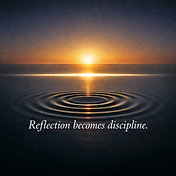
Paxtial leverage:Reflection becomes discipline.
In every era, the measure of strength changes — yet the essence remains: awareness, restraint, and courage. Discipline is not the absence of power; it is power refined. Reflection is not retreat; it is readiness. And peace is not passive — it is the most demanding form of mastery.

Click to view full image.
Comment Added:
Posted Date
Edited
Edited Date
By:
Tony Perez
BALANCING THE VESSEL
Mr. Parker once described the martial arts world as a great cruise ship — the USS Self‑Defense. On the starboard side, the martial artists stand: strong, disciplined, and deeply rooted in tradition. On the port side, the Paxtial artists emerge: calm, conscious, and guided by peace.
But today, the ship lists heavily to starboard. All its minds, talents, and creative souls have gathered on one side — the martial side — leaving the vessel out of balance. The science of Paxtial Arts is the counterweight, the stabilizing force that restores equilibrium. It invites the intelligent, the imaginative, and the ethically aware to bring their gifts to the other side of the ship — to balance strength with wisdom, and defense with conscience.
When the ship steadies, both sides serve their purpose. Martial clarity and Paxtial compassion sail together, not in opposition but in harmony. The voyage of self‑defense becomes not a journey of domination, but of restoration — a movement toward balance within and without.
Click to view full image.
Comment Added:
Posted Date
Edited
Edited Date
By:
Rachel Bickmore
I love what you have shared! This resonates so strongly within me too, well spoken, thank you!
Click to view full image.
Comment Added:
Posted Date
Edited
Edited Date
By:
Stan Hatfield
Options
I work towards a win win scenari, not always as simple as it sounds . Have a plan to walk away unharmed without harming anyone. Pay attention to your intentions.

Click to view full image.
Comment Added:
Posted Date
Edited
Edited Date
By:
Tony Perez
GUARDIANS OF CONSCIOUS PROTECTION
Just a thought ...
Paxtial Arts does not chase heroism. It chases truth. It does not worship combat.
It practices protection with intention — measured, moral, and unshakably clear.
Be a Guardian — not a combatant.

Click to view full image.
Comment Added:
Posted Date
Edited
Edited Date
By:
Tony Perez
GUARD YOUR CALM
Calm is the first act of defense. It is a discipline not a mood — it is a form of structure. When pressure rises, most people collapse inward: breath shortens, vision narrows, and decisions shrink to instinct. But a guardian learns to hold the internal line. To guard your calm is to protect the one resource that cannot be taken from you unless you surrender it. It is the quiet center that lets you see clearly, move deliberately, and choose actions that serve safety rather than fear.
Guarding your calm does not mean feeling nothing. It means refusing to be ruled by the surge of the moment. It is the practice of keeping your breath steady when someone else’s chaos tries to pull you off balance. It is the discipline of noticing your body’s reactions without becoming them. When you guard your calm, you guard your judgment, your timing, your ability to create space, and your right to decide the next step. Calm is not passive — it is protective. It is the shield that lets you navigate conflict with clarity and leave with your integrity intact.

Click to view full image.
Comment Added:
Posted Date
Edited
Edited Date
By:
Tony Perez
DRAWING THE MIND INTO ORDER
I’ve been revisiting the Mind Section lessons while working to refine my drawing skills from the Shapes lesson. Over time, a mix of reflection and untidy sketches began to converge into something clearer — perhaps my own articulation of a personal stand.
The Guardian Mind glyph stands as a symbol of disciplined peace. Its circle reflects unity and the natural order of existence. Its column embodies virtue — the strength that upholds integrity. Its spiral reveals harmony — the unfolding of purpose through reason.
Together, they declare a living philosophy: that belief shapes behavior, and behavior reveals belief. To stand in order, to act with strength, to move in harmony — this is the architecture of peace, the art of the guardian mind.
Every discipline begins with a symbol — not as decoration, but as declaration. The Guardian Mind glyph stands at the entrance of this work for that reason. It marks the person who chooses sovereignty over reaction, clarity over chaos, and disciplined peace over performative strength.
Its circle reflects the order that governs all things. Its column embodies the integrity that holds a life upright. Its Fibonacci spiral reveals the quiet mathematics of growth — deliberate, proportionate, unforced.
Together, they form a single truth: a guardian is shaped from within before they ever act without.
This emblem is not a badge of authority; it is a personal reminder of responsibility. It asks nothing loud of you. It simply invites you to rise to the level of your own reason — to become the kind of person whose presence stabilizes rather than escalates, whose discipline protects rather than dominates, whose sovereignty is felt, not flaunted.
To carry the Guardian Mind is to carry yourself with intention and purpose.

Click to view full image.
Comment Added:
Posted Date
Edited
Edited Date
By:
Tony Perez
THE ARCHITECTURE OF ACTION
Belief dictates behavior.
Every gesture, every choice, is the echo of conviction. John Farnham’s Reasons sings of the moment when belief becomes motion— when the heart’s quiet certainty turns into the courage to stand, to speak, to act.
https://youtu.be/OXNJzSbNazc?si=FXVe01phcRxaHXfI
Belief is not a thought; it is a compass. It points the way even when the path is obscured. Behavior is its footprint—visible proof of the invisible. When belief is clear, behavior becomes pure alignment. When belief falters, behavior fractures.
To live by our reasons is to live by design, not by drift. It is to say: I know why I rise, why I reach, why I refuse to yield. Purpose is not found—it is forged, in the furnace of belief that shapes every act into meaning.
When belief becomes behavior; peace becomes powerful.
Click to view full image.
Comment Added:
Posted Date
Edited
Edited Date
By:
Stan Hatfield
Excellent
Great thoughts tony!in the current environment it is best to have your head on a swivel And be vigilant. Always have a plan!

Click to view full image.
Comment Added:
Posted Date
Edited
Edited Date
By:
Tony Perez
A CITIZEN WHO GUARDS
For generations, martial arts communities have been built on values that reach far deeper than technique—respect, honor, gratitude, and continuous improvement. These were never just words recited at the beginning of class; they were the quiet architecture of a culture. They shaped how we trained, how we treated one another, and how we carried ourselves beyond the walls of the dojo.
But as the world changes, so must the way we understand and teach personal safety. The purpose of training has never been to create better fighters—it has been to create better people:
People who can navigate conflict without feeding it.
People who can stand firm without becoming rigid.
People who can protect peace without abandoning it.
Paxtial People.
When you teach this, you’re not just teaching “moves.” You’re teaching a worldview:
- I am not helpless.
- I am not reckless.
- I am a citizen who guards - myself, my loved ones, and the space I occupy.

Click to view full image.
Comment Added:
Posted Date
Edited
Edited Date
By:
Paxtial Arts
Got An Idea You Want To Discuss? (Please Read)
Ever had a project bouncing around in your head and wondered what our Paxtal community thinks? Well, this is the perfect place to share it!
We’re all about having open and healthy conversations, sharing our experiences, and bouncing ideas off each other to help us grow and bring our projects to life.
Please remember to keep all posts respectful.

Click to view full image.
Comment Added:
Posted Date
Edited
Edited Date
By:
Paxtial Arts
Ensure You Have All The Information (Please Read)
This is your spot to share details about upcoming events! Just a heads-up: Mr. and Mrs. Parker would appreciate it if you could check any events related to the Paxtial arts with them beforehand.
The full program isn’t available yet, and we want to ensure you have all the information you need to get the most out of it.
If you don’t have a direct line to Mr. and Mrs. Parker, feel free to email paxtial.arts.leadership@gmail.com, and we’ll make sure we coordinate with you in advance.
Please remember to keep all posts respectful.

Click to view full image.
Comment Added:
Posted Date
Edited
Edited Date
By:
Paxtial Arts
Lesson Information | Soul: Sight | Shapes
This forum is for the discussion of this lesson:
Lesson 04 - Shapes
Please keep all discussions respectful.
You can find the lesson by clicking the "Go To Lesson" button.
If you’ve submitted an assignment and haven’t received credit yet, please get in touch with us. We’ll make sure to get you the credit you deserve.
You can reach out to us at:

Click to view full image.
Comment Added:
Posted Date
Edited
Edited Date
By:
Paxtial Arts
Lesson Information | Mind: Philosophy | Mindsync
This forum is for the discussion of this lesson:
Lesson 12 - Mindsync
Please keep all discussions respectful.
You can find the lesson by clicking the "Go To Lesson" button.
If you’ve submitted an assignment and haven’t received credit yet, please get in touch with us. We’ll make sure to get you the credit you deserve.
You can reach out to us at:

Click to view full image.
Comment Added:
Posted Date
Edited
Edited Date
By:
Paxtial Arts
Lesson Information | Mind: Philosophy | Mindscape
This forum is for the discussion of this lesson:
Lesson 11 - Mindscape
Please keep all discussions respectful.
You can find the lesson by clicking the "Go To Lesson" button.
If you’ve submitted an assignment and haven’t received credit yet, please get in touch with us. We’ll make sure to get you the credit you deserve.
You can reach out to us at:

Click to view full image.
Comment Added:
Posted Date
Edited
Edited Date
By:
Paxtial Arts
Lesson Information | Mind: Philosophy | Mindgate
This forum is for the discussion of this lesson:
Lesson 10 - Mindgate
Please keep all discussions respectful.
You can find the lesson by clicking the "Go To Lesson" button.
If you’ve submitted an assignment and haven’t received credit yet, please get in touch with us. We’ll make sure to get you the credit you deserve.
You can reach out to us at:

Click to view full image.
Comment Added:
Posted Date
Edited
Edited Date
By:
Paxtial Arts
Lesson Information | Mind: Philosophy | Mindtouch
This forum is for the discussion of this lesson:
Lesson 09 - Mindtouch
Please keep all discussions respectful.
You can find the lesson by clicking the "Go To Lesson" button.
If you’ve submitted an assignment and haven’t received credit yet, please get in touch with us. We’ll make sure to get you the credit you deserve.
You can reach out to us at:

Click to view full image.
Comment Added:
Posted Date
Edited
Edited Date
By:
Paxtial Arts
Lesson Information | Mind: Philosophy | Mindthink
This forum is for the discussion of this lesson:
Lesson 08 - Mindthink
Please keep all discussions respectful.
You can find the lesson by clicking the "Go To Lesson" button.
If you’ve submitted an assignment and haven’t received credit yet, please get in touch with us. We’ll make sure to get you the credit you deserve.
You can reach out to us at:

Click to view full image.
Comment Added:
Posted Date
Edited
Edited Date
By:
Paxtial Arts
Lesson Information | Mind: Philosophy | Mindsound
This forum is for the discussion of this lesson:
Lesson 07 - Mindsound
Please keep all discussions respectful.
You can find the lesson by clicking the "Go To Lesson" button.
If you’ve submitted an assignment and haven’t received credit yet, please get in touch with us. We’ll make sure to get you the credit you deserve.
You can reach out to us at:

Click to view full image.
Comment Added:
Posted Date
Edited
Edited Date
By:
Paxtial Arts
Lesson Information | Mind: Philosophy | Mindflip
This forum is for the discussion of this lesson:
Lesson 06 - Mindflip
Please keep all discussions respectful.
You can find the lesson by clicking the "Go To Lesson" button.
If you’ve submitted an assignment and haven’t received credit yet, please get in touch with us. We’ll make sure to get you the credit you deserve.
You can reach out to us at:

Click to view full image.
Comment Added:
Posted Date
Edited
Edited Date
By:
Paxtial Arts
Lesson Information | Mind: Philosophy | Mindsight
This forum is for the discussion of this lesson:
Lesson 05 - Mindsight
Please keep all discussions respectful.
You can find the lesson by clicking the "Go To Lesson" button.
If you’ve submitted an assignment and haven’t received credit yet, please get in touch with us. We’ll make sure to get you the credit you deserve.
You can reach out to us at:

Click to view full image.
Comment Added:
Posted Date
Edited
Edited Date
By:
Paxtial Arts
Lesson Information | Mind: Philosophy | Mindscope
This forum is for the discussion of this lesson:
Lesson 04 - Mindscope
Please keep all discussions respectful.
You can find the lesson by clicking the "Go To Lesson" button.
If you’ve submitted an assignment and haven’t received credit yet, please get in touch with us. We’ll make sure to get you the credit you deserve.
You can reach out to us at:

Click to view full image.
Comment Added:
Posted Date
Edited
Edited Date
By:
Paxtial Arts
Lesson Information | Mind: Philosophy | Art
This forum is for the discussion of this lesson:
Lesson 03 - Art
(Note: there are 2 parts to this lesson)
Please keep all discussions respectful.
You can find the lesson by clicking the "Go To Lesson" button.
If you’ve submitted an assignment and haven’t received credit yet, please get in touch with us. We’ll make sure to get you the credit you deserve.
You can reach out to us at:

Click to view full image.
Comment Added:
Posted Date
Edited
Edited Date
By:
Paxtial Arts
Lesson Information | Mind: Philosophy | Formula
This forum is for the discussion of this lesson:
Lesson 02 - Formula
Please keep all discussions respectful.
You can find the lesson by clicking the "Go To Lesson" button.
If you’ve submitted an assignment and haven’t received credit yet, please get in touch with us. We’ll make sure to get you the credit you deserve.
You can reach out to us at:

Click to view full image.
Comment Added:
Posted Date
Edited
Edited Date
By:
Paxtial Arts
Lesson Information | Mind: Philosophy | Glyphs
This forum is for the discussion of this lesson:
Lesson 01 - Glyphs
Please keep all discussions respectful.
You can find the lesson by clicking the "Go To Lesson" button.
If you’ve submitted an assignment and haven’t received credit yet, please get in touch with us. We’ll make sure to get you the credit you deserve.
You can reach out to us at:

Click to view full image.
Comment Added:
Posted Date
Edited
Edited Date
By:
Paxtial Arts
Welcome To The Forums! (Please Read)
We would like to welcome everyone to our Paxtial Arts Forums!
This is a space for you to chat about anything that’s not specifically related to the Lesson Sections or Courses.
Please remember to keep all posts respectful.
Should you have an issue, you can reach out to us at:
paxtial.arts.leadership@gmail.com
Thank you for being a part of our team!